Siesta Key Infrastructure
Capacity, Challenges & Improvements
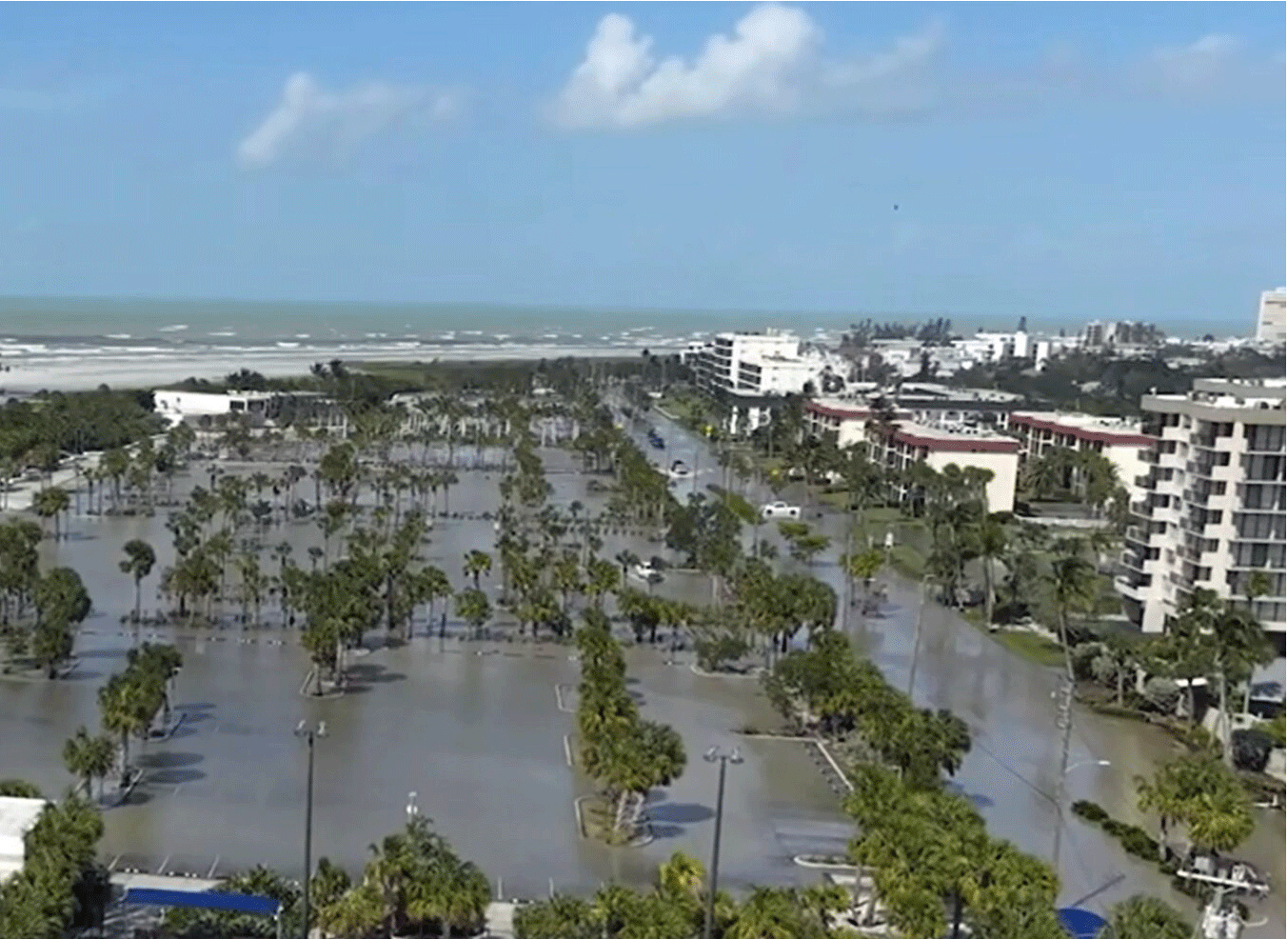
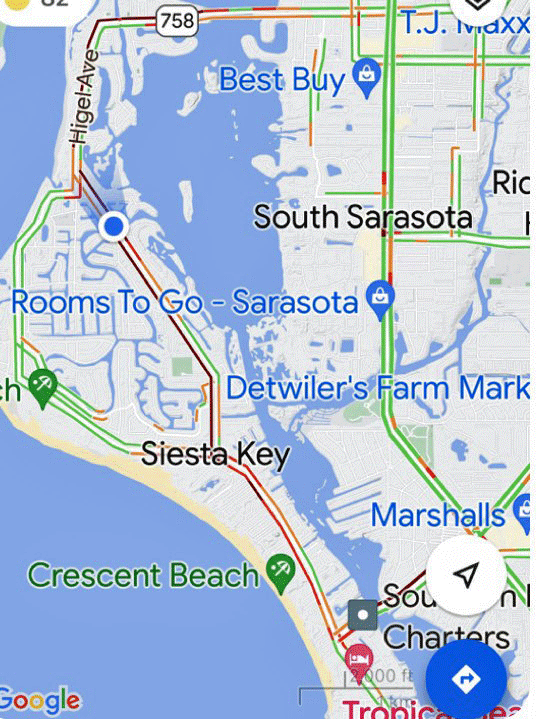

Protecting Siesta Key requires more than protecting our zoning and Comprehensive Plan. It also requires understanding the capacity and limitations of the infrastructure that supports our island.
PSK has been actively working on these issues — meeting with Sarasota County staff, reviewing County studies and reports, identifying concerns, and following projects involving stormwater, wastewater and public utilities, transportation and roads, and resiliency. That work will continue.
Siesta Key is a barrier island that is essentially built out. Our roads are constrained and generally cannot be widened, access on and off the island is limited, and there is little room to expand existing infrastructure.
That matters when the County considers growth. Increased density and intensity can add demands on roads, drainage, wastewater systems, evacuation routes, and other public services without providing the ability to expand the infrastructure needed to support it.
PSK will continue to track both needed improvements and existing deficiencies — and ensure that infrastructure limitations remain part of the discussion when decisions affecting the future of Siesta Key are made.
Siesta Key Infrastructure Updates
Stormwater
On August 25, 2026, the County Commission unanimously approved a $446,855 comprehensive stormwater and flooding study for Siesta Key. The year-long study will examine flooding throughout the island, including known problem areas and our evacuation routes, and use updated stormwater modeling to identify deficiencies and potential solutions.
This is not the first time the County has studied flooding on Siesta Key. An earlier Sarasota Bay Watershed Management Plan identified Northern Siesta Key as a priority area because of flooding and stormwater concerns. The new study is especially important following the extensive flooding experienced during the 2024 hurricanes and will provide updated modeling of conditions across the island.
PSK will closely follow the study, compare its findings with earlier County studies, and—most importantly—monitor what improvements the County recommends and ultimately implements.
Public Utilities - Wastewater
PSK has also been working directly with Sarasota County Public Utilities on Siesta Key’s aging wastewater infrastructure. In August 2026, board members Carlyn Berghoff and Lourdes Ramirez met online with Public Utilities staff for an update on issues discussed over the past year.
Planned work includes upgrades to lift stations on Oxford Drive and Sandy Nook, repairs on Avenida del Norte, replacement of undersized sewer pipes, and raising vulnerable lift-station equipment to better protect it from flooding. The County is also purchasing locking manhole covers to prevent them from being opened during flooding and creating a serious road hazard.
Another concern is the significant increase in wastewater entering the system during heavy rain. County staff believes some older condominium properties may have roof drains or other stormwater drainage improperly connected to the sanitary sewer system. These connections may have existed for decades but now need to be identified and corrected. Public Utilities plans to work with condominium boards and managers on this issue.
The County has also adopted a new wet-weather planning standard based on a 10-year, 24-hour storm to evaluate whether the wastewater collection system has sufficient capacity during major rain events.
PSK will continue working with County staff and keeping our members informed as these projects move forward.
Transportation and Roads
Because Siesta Key's roadway system has no room to expand, improving transportation alternatives is an important part of addressing congestion.
Sarasota County launched the free Siesta Key trolley in 2017. Now known as the Route 77 Siesta Islander, the service connects Siesta Key Village, Siesta Beach, South Village and Turtle Beach. By May 2024, the trolley had already carried its two-millionth passenger.
The County specifically identifies reducing traffic congestion on Siesta Key as one of the purposes of the trolley. By allowing residents and visitors already on the island to travel to the beach, Village and other destinations without using their cars, the service helps reduce some vehicle trips and demand for limited parking.
North Siesta Village Trolley Expansion — 2026
Commissioner Mark Smith has advocated for extending the trolley farther into the northern portion of Siesta Key Village. Following direction from the County Commission, Breeze Transit developed a proposal for a 12-month pilot program.
Beginning September 1, 2026, the Route 77 Siesta Islander will extend approximately one block farther into the northern Village. The County will evaluate ridership, traffic and safety conditions during the pilot program and, if successful, may consider establishing a permanent accessible boarding location in the area.
The extension is expected to operate without additional cost to the County.
For a built-out barrier island where roadway expansion and additional parking are severely constrained, improving and expanding transportation alternatives such as the Siesta Islander is the only practical way to help manage congestion.
Resiliency
Sarasota County's Vulnerability Assessment and Adaptation Plan identifies Siesta Key as one of six priority areas for resiliency planning. The County evaluated 168 important facilities and infrastructure assets on the island—including roads, utilities, stormwater facilities, parks and emergency facilities—and found that 167 have some level of vulnerability under the flooding scenarios studied.
Unlike the individual infrastructure projects discussed above, this is a long-term County planning effort that identifies vulnerabilities and recommends future projects and priorities. PSK will follow the County's implementation of the plan, including which Siesta Key projects are prioritized, funded and ultimately completed.